Sound waves are a fascinating aspect of the world
around us, they are invisible vibrations that travel
through different mediums, such as air, water, or
solid objects.
These vibrations create a series of compressions
and rarefactions that our ears can detect and interpret
as sound. The frequency of sound waves determines
how high or low-pitched the sound is, and this is an
important characteristic that helps us differentiate
between different sounds. In this sense, understanding
the frequency of sound waves is crucial to understanding
how sound works and how we perceive it.
Today we will solve a series of activities to better comprehend the nature of sound, how we hear, and the characteristics of sound such as loudness, pitch and timbre.
Solve the following activities in the order you wish, just make sure you finish them all:
Week 3
Class 1: Frequency and practice



VIRTUAL HAIRCUT
This is a video you must watch
using headphones. Play it, close
your eyes and listen to the complete video. VIRTUAL HAIRCUT VIDEO
Then answer this in your notebook:
How was this video made? How did
you like it?

NATURE OF SOUND
Read this infographic about
sound and write 4 new things
you learnt from it.

HOW MUCH CAN YOU HEAR?
Watch this video playing the different frequencies of sound. Use headphones at a volume that doesn't affect your eardrums.
Then write in your notebook the range of frequencies in which you heard the sound: the moment in which you started hearing the sound and in which you stopped hearing it. Describe how does the pitch change as the frequency increases?
CHANGING SOUNDS
Visit the SCIENCEKIDS interactive website. First, play with the instruments following the instructions from the activity.
Then click on the tab that says "sort sounds" and classify the sounds you are hearing according to their pitch and loudness. In your notebook explain how does pitch changes when the length of the guitar strings is changed.

How does sound travel through different mediums?
Class2
Imagine standing on a quiet beach, with the sound
of the waves gently lapping against the shore. As
you listen, you might wonder how exactly that sound
s reaching your ears. Is it traveling through the air like
most sounds, or is there something special about the
way it's moving through the water? The truth is, sound
can travel through many different mediums, and each
one has its own unique properties that affect how it
moves and how we perceive it. From the air we breathe to the water we swim in, let's explore the fascinating world of sound propagation through various mediums.
1) Visit the schoolnet.org website and answer:
a) Explain how is the speed of sound in different mediums. Draw the particles for the 3 states of matter and relate the distance of the molecules to the speed of sound in each state.
b) Write the speed of sound in 2 gases, 2 liquids and 2 solids (don't forget the units)
2) Read the article on howstuffworks.com and answer: can we hear in outer space?
3) Create a string phone following these instructions and solve the activity:
Then, complete the following text in your notebook using the keywords from the box:
4) After creating the string telephone, answer what happens to the sound if you:
a) Let the string become loose when you talk?
b) Hold the string when you talk?
c) Cross 2 string telephones?
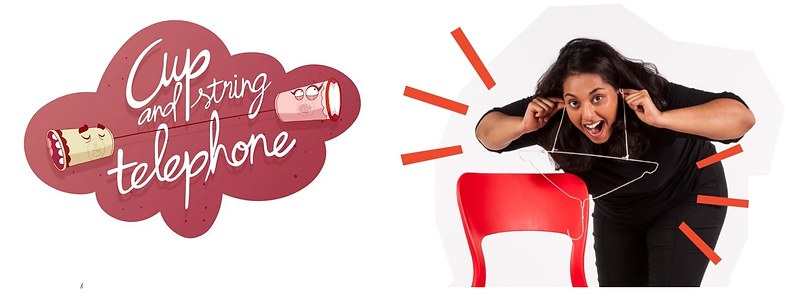
5) Follow the instructions from the ScienceLearningMuseum about how to create some ear gongs using a coat hanger and answer:
a) Why is the sound different when you knock the hanger without having the string in your ears and when you place them there?
b) According to the website, what's an important use we give to this phenomenon?